

Things Every Small Business Should Know About Credit Card Processing in 2026
Remember when setting up a merchant account meant signing a rigid three-year contract, waiting a week for a bulky countertop terminal to arrive, and praying your customers didn’t mind waiting ten seconds for a chip card to process?
That world is officially gone. The payments landscape has evolved faster over the last few years than it did in the previous two decades combined.
As an entrepreneur, managing credit card processing in 2026 is no longer just a passive utility expense listed on your monthly balance sheet. It is a dynamic, highly automated operational strategy that directly impacts your daily cash flow, digital security, and customer retention.
According to industry data, over 76% of small business owners report that their standards for payment infrastructure are significantly higher than they were just three years ago. Immediacy, visibility, and transparency are the new baseline.
If you are still running your merchant services on a legacy framework, you are likely losing margin to hidden transaction fees and dropping sales to checkout friction. Here are the five critical shifts happening in the payment space right now that every business owner must master to stay competitive.
1. Contactless Technology is the Absolute Baseline
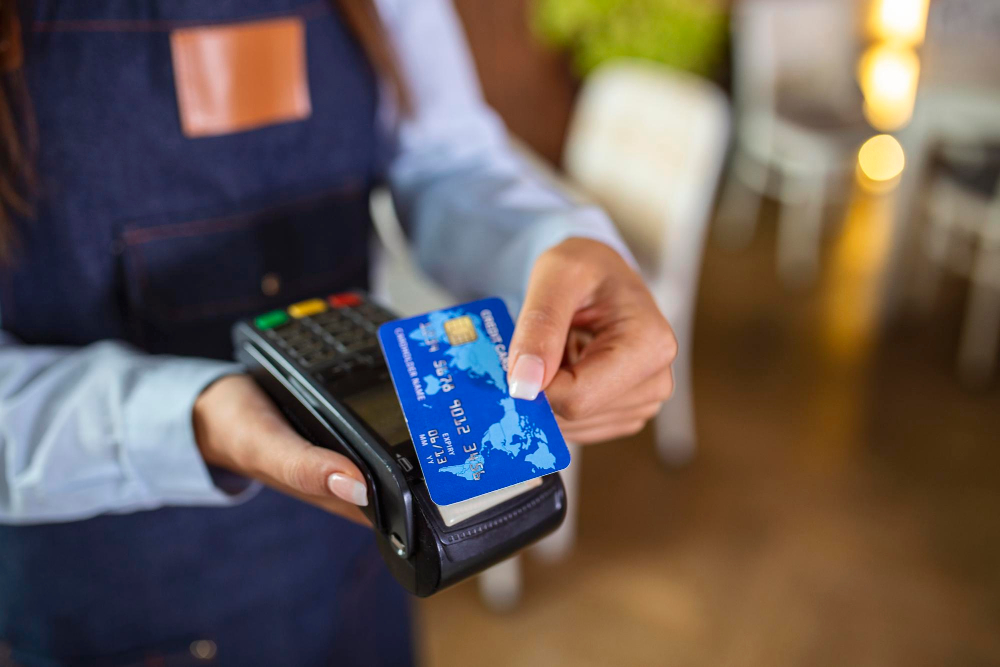
If your cash register requires a customer to physically insert a chip card and wait for a sluggish authorization cycle, you are falling behind consumer expectations. Speed is the ultimate currency at checkout.
In fact, market studies confirm that over 65% of all in-person card transactions are entirely contactless, driven by NFC-enabled cards, smartwatches, and smartphone-based digital wallets like Apple Pay and Google Pay.
For high-volume retail and service environments like coffee shops, boutiques, and mobile service providers, this operational transition is a major victory. A standard chip-and-PIN entry can take anywhere from 8 to 12 seconds to fully clear.
By contrast, a contactless tap cuts that transactional window down to a mere 2 to 3 seconds. Over the course of a busy weekend rush, that time savings translates directly to higher customer throughput, shorter lines, and a dramatic drop in abandoned checkouts.
The Rise of Tap-to-Pay on Phone
The hardware landscape has changed just as rapidly. Thanks to software-driven POS architecture, merchants no longer need to purchase or lease expensive external terminal hardware.
Using secure “Tap-to-Pay on Phone” software, independent business owners can convert any standard Android or iOS smartphone into a fully functional payment reader. This hardware-free model dramatically lowers the barrier to entry for mobile entrepreneurs, pop-up markets, and field contractors.
2. Real-Time Payments and Immediate Funding are Reimagining Liquidity
Waiting two to three business days for credit card batches to settle into your business checking account is a massive drag on liquidity. In an era where supply chains require rapid agility and inflation exerts constant pressure on operational margins, slow funding timelines can cripple a growing company.
Fortunately, payment processing infrastructure has experienced a structural upgrade. Backed by the widening rollout of instant bank networks like FedNow and the Clearing House’s RTP network, immediate settlement is rapidly becoming the standard operational expectation.
Surveys indicate that 59.3% of small businesses view faster access to funds as a baseline requirement for their merchant services provider.
Instead of waiting out holiday weekends or bank closures to cover payroll or restock inventory, modern credit card processors can route funds directly into a merchant account within minutes of a completed swipe.
This continuous, 24/7 liquidity loop gives entrepreneurs complete visibility over their daily cash position and allows for true automated treasury management.
3. AI-Driven Fraud Prevention is Mitigating Risk Proactively
The battle against e-commerce fraud and friendly fraud (unwarranted chargebacks) has entered a hyper-automated phase. According to federal reports, business losses stemming from authorized push payment scams and automated card-testing scripts exceed $3 billion annually.
Legacy anti-fraud filters often relied on rigid, reactive rules that routinely blocked valid customer transactions, resulting in costly false declines that alienate buyers.
To combat these advanced digital threats, modern credit card processing in 2026 heavily relies on machine learning models built directly into edge computing nodes. These AI tools evaluate hundreds of unique metadata points—including biometrics, behavioral rhythms, and device fingerprints—in fractions of a second before a transaction is ever sent to the credit card network.
This structural shift transforms security from a reactive defense line into a predictive shield. For a small business owner, this means your payment platform actively minimizes chargeback exposure and automated bot attacks without introducing unnecessary friction for your authentic, returning customers.
4. The Industry is Overhauling Opaque Transaction Fees
For decades, navigating a monthly merchant services statement was notoriously difficult. Legacy processors frequently hid extra fees inside multi-tiered pricing plans, unexpected statement generation fees, and steep penalties for minor PCI compliance oversights. As profit margins tighten across every retail sector, small business owners are demanding radical transparency.
More than 42% of entrepreneurs cite rising processing costs as their primary operational strain, while nearly 39% report that surprise platform fees are their primary motivation for switching processing vendors.
This market frustration has driven the widespread adoption of two transparent, business-friendly pricing models that remove the guesswork from payment mathematics:
-
Interchange-Plus Pricing: Universally recommended by financial experts as the most cost-effective and honest model. Merchants pay the exact, baseline transaction fee set by the card network (Visa, Mastercard, American Express) plus a clearly documented, fixed percentage markup to the processor.
-
Subscription / Flat-Rate Services: Ideal for startups and lower-volume storefronts. Merchants pay a fixed, predictable fee per transaction or a steady monthly subscription amount with absolutely zero hidden ancillary costs, termination penalties, or annual account fees.
By opting for an interchange-plus framework, high-volume businesses gain absolute clarity over exactly where every penny of processing revenue goes, preventing margin bleed from silent rate hikes.
5. All-in-One POS and Accounting Integration is the New Normal
Operating your business across isolated software silos is an expensive drain on your time. If your physical point-of-sale register doesn’t automatically talk to your e-commerce storefront, your inventory tracking sheet, and your cloud accounting books, you are wasting valuable hours on manual entry.
Modern transaction networks function as central operating hubs rather than just simple tools for accepting plastic. When a client finishes an online checkout or taps their smartwatch at your counter, the integrated payment ecosystem instantly:
-
Records the transaction data and settles the processing fees.
-
Updates your centralized inventory levels across all physical and digital channels.
-
Synchronizes the revenue, tax data, and cost metrics directly into your accounting software.
This seamless data automation saves business owners hours of manual reconciliation every single week. More importantly, it eliminates human typographic errors and ensures that your financial reporting data remains completely accurate every day of the fiscal year.
Frequently Asked Questions
What should a small business look for when choosing credit card processing in 2026?
Small businesses should prioritize platforms that provide transparent interchange-plus pricing models, sub-hour real-time payment settlements, native contactless support (including mobile wallets), and direct API integration with existing bookkeeping software. Avoid processors that require long-term contracts or lease hardware.
Why is contactless payment technology considered essential for retail?
Contactless checkouts reduce typical payment execution speeds from approximately 10 seconds down to under 3 seconds. This speed upgrade shortens store lines, minimizes checkout friction, matches current mobile consumer habits, and prevents shopping cart abandonment during peak business hours.
How does AI-driven fraud prevention reduce merchant costs?
AI systems analyze transaction data in real time to accurately flag fraudulent activity and bot scripts before the transaction runs through the network. This prevents costly chargeback penalties and limits false declines on legitimate customers, which can save businesses thousands in lost sales.
Is it better to lease or buy credit card processing hardware?
Experts universally recommend buying your point-of-sale hardware outright. Equipment leasing arrangements frequently wrap merchants into expensive, multi-year contracts that end up costing many times more than the actual market retail price of the terminal.
Managing credit card processing in 2026 requires moving away from the slow, opaque payment networks of the past and embracing fast, integrated, and transparent ecosystem platforms. Modern payment networks protect business margins through edge-computed AI security filters, while near-instant funding timelines give business owners immediate control over their cash flow. By leveraging transparent interchange-plus billing structures and smart, all-in-one POS accounting integrations, small businesses can easily eliminate hidden processing costs and deliver the seamless checkout experiences today’s mobile-first consumers expect.
Optimize Your Payment System
Are you ready to stop losing your hard-earned margins to hidden processor markups and outdated terminal lag? Take an hour this week to pull your latest merchant statement, audit your current true processing costs, and map out an upgrade toward a real-time, omni-channel payments partner. Giving your checkout infrastructure a modern tune-up is one of the simplest, highest-return operational adjustments you can make for your business this year.
