

The Logistics Shockwave: How Amazon Shipping Is Rewriting the Corporate Delivery Playbook
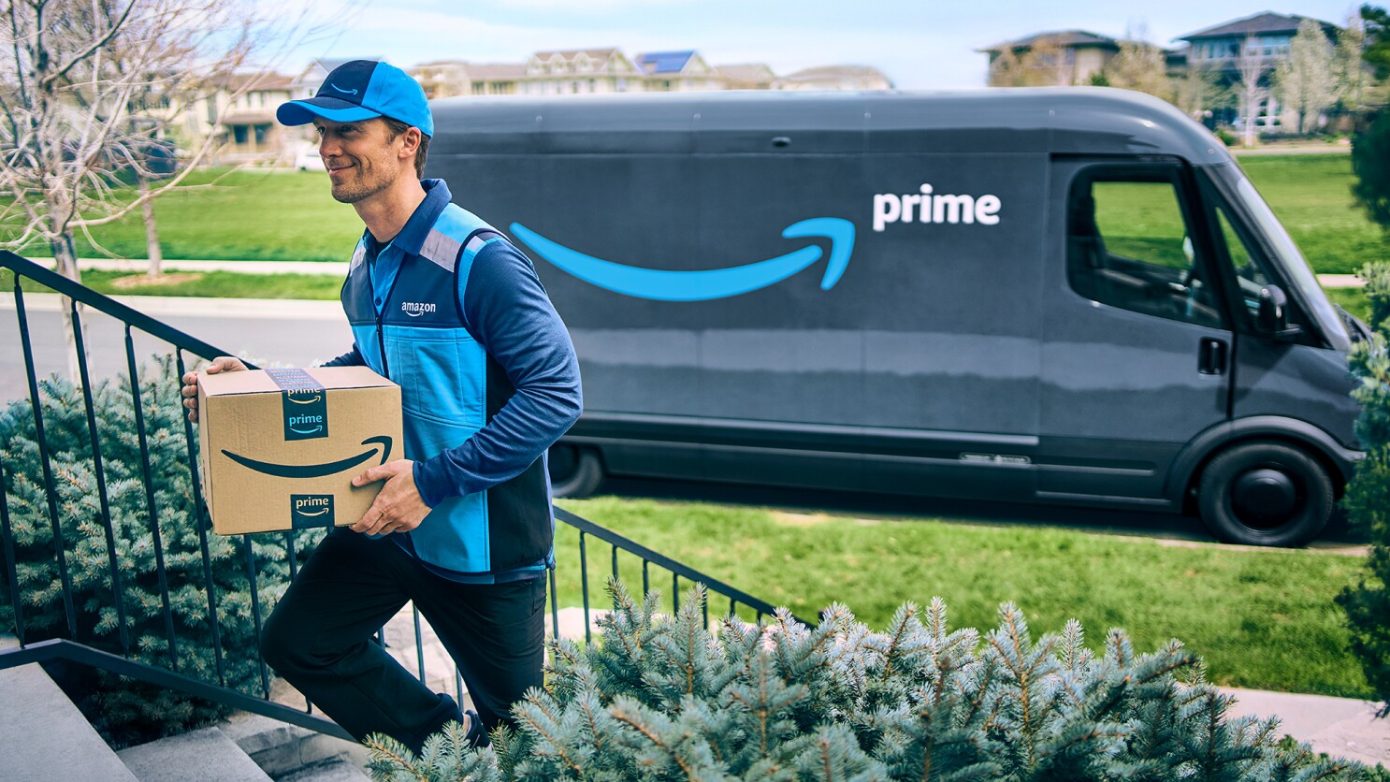
Have you noticed how your regular online orders seem to arrive on your doorstep faster than ever, often before you even have time to check the tracking number? For years, we have credited this wizardry to the internal mechanics of e-commerce. But behind those bright blue vans lies a hyper-aggressive, asset-heavy logistics beast that is no longer content just delivering its own packages.
The invisible wall separating consumer e-commerce from industrial business shipping has officially fractured. The multi-billion-dollar parcel duopoly long enjoyed by United Parcel Service Inc. (UPS) and FedEx Corp. is facing its most direct competitive threat in a generation.
Following a major Wall Street alert detailing the rapid expansion of Amazon shipping, shares of both legacy carriers surrendered their market gains and slipped into the red. Investors are realizing that the infrastructure built to dominate retail delivery is being offered directly to independent business shippers—and the pricing disruption is nothing short of brutal.
The Wall Street Warning That Rattled the Duopoly
The sudden shift in market sentiment was triggered by an authoritative research note from Morgan Stanley analyst Ravi Shanker. The report highlighted a growing risk factor that legacy transport firms can no longer afford to ignore: Amazon is offering inexpensive, simple, and increasingly fast delivery services to completely independent, non-Amazon third-party clients.
Data compiled by trade publication Supply Chain Dive reveals an alarming reality for the incumbents. Amazon is systematically pricing its parcel services at or below the rates charged by UPS and FedEx. More shockingly, the e-commerce giant is routinely undercutting the U.S. Postal Service (USPS)—an institution that has traditionally served as the rock-bottom pricing benchmark for the entire domestic parcel delivery market.
While legacy transport stocks like Old Dominion Freight Line and Saia had previously enjoyed a furious rally on Wall Street, the realization that Amazon’s logistics arm is targeting their core client base has triggered sharp selloffs across the broader transportation indexes.
Inside the Surcharge War: How Amazon Limits Complex Pricing
To understand why enterprise shippers are looking closely at alternative networks, you have to look at how traditional freight invoices are calculated. For decades, legacy couriers have relied on a labyrinth of additional fees to sustain their profit margins:
-
Residential delivery surcharges
-
Fuel adjustment multipliers
-
Peak seasonal capacity penalties
-
Extended area delivery fees
According to supply chain industry experts, Amazon Shipping is approaching corporate accounts with a simplified framework that strips these hidden costs away entirely. Most notably, they are waiving residential delivery surcharges altogether.
By utilizing simplified pricing and dropping these legacy line-item penalties, Amazon is creating a dynamic where businesses can achieve total shipping cost savings of as much as 30% compared to identical contracts with FedEx or UPS.
The momentum tells us businesses see the value it already offers, and we’re just getting started,” states Jeff Helbling, Vice President of Business and Go-to-Market at Amazon Supply Chain Services.
Expanding the Infrastructure: From Metros to Full Truckloads
What started as a quiet experiment targeting small parcel delivery within major metropolitan areas has transformed into an enterprise-grade commercial shipping suite. Under the umbrella of Amazon Supply Chain Services (ASCS), the company has opened up its comprehensive web of heavy machinery, aircraft, intermodal ocean containers, and fulfillment warehouses to any brand looking for reliable logistics.
Shaking Up Less-Than-Truckload (LTL) Freight
In June 2026, Amazon expanded its Less-Than-Truckload (LTL) offering to transport freight across any destination in the United States, including third-party facilities and distinct retail partners. LTL services handle commercial shipments that are too large for a standard delivery van but too small to fill an entire 53-foot semi-truck trailer.
Wall Street analysts initially assumed that legacy freight companies would be relatively insulated from tech disruption due to the highly specialized real estate networks required to cross-dock heavy industrial cargo. However, Amazon’s rapid infrastructure expansion has placed direct pressure on that perceived real estate moat. Morgan Stanley noted that Amazon will likely capture meaningful market share even if its service levels aren’t initially “best-in-class,” simply because its baseline cost structure is so aggressively optimized.
The Incumbent Defense: Pivoting to High-Margin Premium Niches
Faced with an unprecedented assault on their low-margin e-commerce parcel volumes, how are traditional couriers fighting back? Instead of entering a race to the bottom on price, both FedEx and UPS are accelerating strategic transformations to move upstream.
Currently, UPS and FedEx maintain an advantage in the high-margin, time-sensitive logistics segments. These include premium overnight delivery, same-day critical air express, and specialized healthcare cold-chain distribution. Because medical supplies and high-value corporate documents demand strict security protocols and flawless execution, buyers are willing to pay a premium.
Logistics trend analysts indicate that UPS has been proactively shedding low-margin retail volume—including parts of its historical partnership with Amazon itself—to focus its capital on building clinical healthcare networks. However, the multi-million-dollar question hanging over the market is clear: How long will it be before Amazon builds out its own overnight express framework to challenge those premium margins, too?
Frequently Asked Questions
What is Amazon Shipping and how does it work?
Amazon Shipping is a dedicated parcel delivery service offered to independent businesses and non-Amazon sellers. It allows merchants to leverage Amazon’s private domestic transportation network to ship products directly to consumers, even if those products were bought on external e-commerce sites or independent corporate channels.
Why did UPS and FedEx stock prices decline recently?
Shares fell after a research alert from Morgan Stanley warned that Amazon’s aggressively priced logistics network is actively peeling third-party business accounts away from the legacy carriers. Investors are concerned about long-term margin compression, loss of market share, and severe pricing pressures.
How much cheaper is Amazon Shipping compared to traditional couriers?
Industry data indicates that by offering simplified base rates and eliminating common residential delivery surcharges, Amazon Shipping can provide corporate accounts with total cost savings of up to 30% compared to identical service quotes from FedEx or UPS.
What is the Amazon Less-Than-Truckload (LTL) service expansion?
Launched under Amazon Supply Chain Services, the LTL program expands the company’s freight network to carry heavy commercial cargo that is larger than a standard retail package but smaller than a full trailer load. It connects third-party fulfillment centers, independent warehouses, and retail storefronts across the entire United States.
The expansion of Amazon Shipping marks the end of the traditional parcel delivery duopoly. By weaponizing its unmatched scale to eliminate surcharges and slash commercial shipping rates by up to 30%, Amazon has forced UPS and FedEx onto the defensive. While legacy carriers are actively pivoting to high-margin niches like healthcare, they must brace for persistent pricing pressures across the global logistics industry.
Are you managing an independent e-commerce brand or managing corporate logistics? Evaluate your current third-party freight agreements to see if emerging supply chain networks can optimize your bottom-line fulfillment costs.
